Category Archives: Food

There’s too many things to put in a mouth

My brother Paul Barchilon Nursing with me looking on, 1965
My brother Paul Barchilon nursing with me looking on, 1965

he reaches for everything
with his mouth, his mouth

it all goes in
and then drools out

he’s so full of

JOY

he’s my
JOY BOY

he’ll stare at his hands
and reach for the sky
with his mouth,
with his mouth,

with his whole being

he wakes in the morning
cooing and full of delight
no one needs to remind him
to give thanks or be grateful

his every moment is full of loving
and exploring

he oozes delight

he reaches for me with his mouth
with his mouth
and I joyfully give in to his sweet
need and his warm

mouth

©Nicole Barchilon Frank, mom in love, (6/20/97 Ethan’s fifth month birthday)

The Ten Commandments (and a few more) of Nicole’s Kitchen

Getting Veggies ready for grilling

The Ten Commandments of Nicole’s Kitchen

  1. I am your kitchen Goddess; there are other kitchen Gods & Goddesses, but for the purpose of creating yummy experiences for your self and your guests, you must follow my commandments, and your food will taste heavenly, stray from my directions and your time and effort in the kitchen will have been wasted!
  2. The secrets to a Heavenly Meal are TIME and LOVE. If you invest your time in the meal, and love what you are doing, the meal will be good. If you rush and are resentful or in a foul mood, your food will reflect this.
  3. Think about creating a compost bin in your yard or in a nearby garden if you don’t have a yard. In this way you can take all the discarded food from your kitchen and give it back to the Earth. This returns some nutrients to her. Remember that all you do in your kitchen with food is a result of the gifts the Earth has given you. If you can’t do compost, occasionally give a choice piece of something you’ve cooked to a favorite tree or flower and say thank you to the Earth. Cultivate an attitude of thankfulness and grace with the Earth.
  4. Don’t even think of using any ingredients that aren’t fresh or organic. If you can’t get organic products where you live, encourage your local stores to carry organic produce and foods. It is a far, far better thing you do when you discard a browned piece of lettuce than serve it to a loved one. All salads or greens should be soaked—that’s right soaked—in large plastic tubs of water. Spinach will need to be soaked three or four times; lettuce at least twice; veggies like celery, carrots, green beans, just once. It’s a good idea to have at least two or three plastic tubs marked “VEGGIES ONLY” in your kitchen under the sink or somewhere easily accessible. Organic veggies and products are fresher, healthier, and they taste better!
  5. Your table should always be open to guests as well as family. This means you should aim to create something delicious and fantastic always. You never know who will be walking in the door. When you aren’t in the mood to cook, don’t. This is when you get out the frozen pizza or burrito that you have on hand, or when you make macaroni and cheese.
  6. Get into your food! Wear an apron, make a huge mess, touch everything, smell everything, get very familiar with your food. Make it yours. Love it and kiss it. If you’ve never kissed a ripe tomato fresh off the vine, or if you haven’t peeled a mango with your hands and kissed it and gotten slurpy mango wetness on your face, something needs to change now! There is no judgement here. This is just a playful invitation to create a deeper relationship with your food. GO PLAY!!!
  7. There is no point in trying to create a meal/work of art in a cluttered or dirty kitchen. So, if you are using my recipes, clear your counters first and find a way to have more counter space, not less, for your kitchen adventures.
  8. Keep your knives sharp and have different sizes. It makes everything easier.
  9.  FRESH LEMONS should be available at all times They are essential ingredients in everything I cook.
  10. Give some form of thanks before eating. You can say any kind of blessing you wish or just sit in silence; even if it’s just a brief moment. If you let yourself feel grateful for what is in front of you, it will change every meal you ever eat. The best thing, from a traditional Jewish perspective, is for you to actually acknowledge out loud the Creator for blessing you with the apple, or the rice, or the bread, or the mixed wonders on your plate. There are many teachings about how an essential spark of holiness is dormant in our food, and it cannot be awakened until we acknowledge it and give thanks. I often teach the young children I work with to imagine that inside every grape, inside every drop of food they eat, is a tiny fairy, who is asleep, waiting to do a dance and be free. If they don’t sing a song to her, she won’t wake up. This is a magical explanation, but it helps the children understand that there is something precious in every plant and every fruit, and that they can participate in enriching their food and their food experience. It makes no difference to me how you give thanks. You can imagine a fairy dancing in joy because you’ve awakened her inside your lettuce leaf. You can give thanks for the long journey that same leaf of lettuce has gone on to get to your plate. You can just sit still and recognize how truly lucky and blessed you are to have a full plate. This is your invitation to experience grace, and whichever way works for you will make me happy. And, who knows, I may even do a little dance!

The Expanded or Lesser, but still important, Commandments

  • GET INTO YOUR FOOD! This suggestion bears repeating as all good suggestions do. What you put in your mouth isn’t just stuff or fuel. Every spice and leaf is coming from the Holy One just for you and yours. Grace your food as you would your sacred space. Keep your awareness always with your cooking. Talking on the phone is not amenable to good cooking. I will often clean while on the phone, but I almost never cook and talk to others unless it is to ask them to do something meal related. Concentration in the kitchen yields the truest results.
  • Have fun, take risks except with cooking times of meat or whether ingredients are really fresh! Explore the contours of your taste buds. Try different flavors.
  • At this point in my cooking career I prefer blanching vegetables to steaming. This means having a large pot of rapidly boiling water ready just before the meal is to be served. Put in a liberal amount of salt when the water is close to boiling. Once the water is boiling, put in whatever veggies you’ve cleaned and prepared. They only need to be in the water for 2–5 minutes at most. I have a hand–held strainer handy to fish them out. Place them in a bowl and serve them with whatever dressing or sauce you wish. Always put olive oil on veggies first as it coats the veggies and keeps the vitamins from getting leached out by lemon juice or vinegar. I do all my vegetables this way now. I never steam them. Also, you can save the blanching water to use as a base/stock for your rice or soups. The water will be good in the fridge for about 3 days.
  • Margarine is gross and not good for you so don’t use it. If you can’t use butter, use olive oil or coconut oil.
  • All fish, that you will be cooking, should be soaked for ½ an hour or more in a large bowl of very salty (at least 2 tablespoons kosher salt) water. You will be amazed at the gunk that is left in the water. Rinse the salt water off and then marinate or cook. Do not use a plastic bowl or bucket for this. Plastic retains the flavors, odors, and smells of all it comes in contact with. If you are cooking in the summer, you can put ice in the bowl; otherwise it’s fine to keep the fish on the counter in a large stainless steel bowl full of cold salted water while you are preparing the marinade.

Row, Row, Row your boat gently down the stream
Rinse, Rinse, Rinse your Rice ‘til the water runs clean
Merrily, Merrily, Merrily life is but a dream
Merrily, Merrily, Merrily your rice will be a dream

Other standards in Nicole’s kitchen:

  • never–ending bottle of organic olive oil (cold pressed or first pressing)
  • Mirin (Japanese cooking wine)
  • fresh garlic
  • fresh ginger
  • lemons, lemons, lemons, hmm let me see, more lemons!
  • fresh herbs/spices; throw away the stuff in your spice cabinet that is over a year old. Buy spices in small amounts from the bulk bins at your health food store. There is a greater turnover in the spice bins so the spices/herbs from there are much fresher.
  • Le Creuset cookware, worth its weight in gold and almost that expensive, but it will be around for your grandchildren. I have used Le Creuset every day for the last 20 years and will be using the same pots in my 90’s if I’m given that long to live. Also, it’s a good idea to own one really solid large cast–iron pan, which will never come in contact with soap.
  • A LOVE OF EXCELLENCE!

©by Nicole Barchilon Frank from her Cookbook (in final editing stage)

Divine Delights
Persian, French & Sephardic Savors from the Kitchen of
Nicole Barchilon Frank

Four Worlds/Layers of our Souls, Tu B’Shevat Meditation

A Holy Table to Meditate on

This teaching is a tiny seedling of a much greater tree. Below are the meditations that I wrote to help lead my part of an event.  The instructions below were part of a ritual meal of fruit and wine and between each section here there were other teachings about each individual glass of wine. I will upload those in the future and post an update to this article when I have that information.

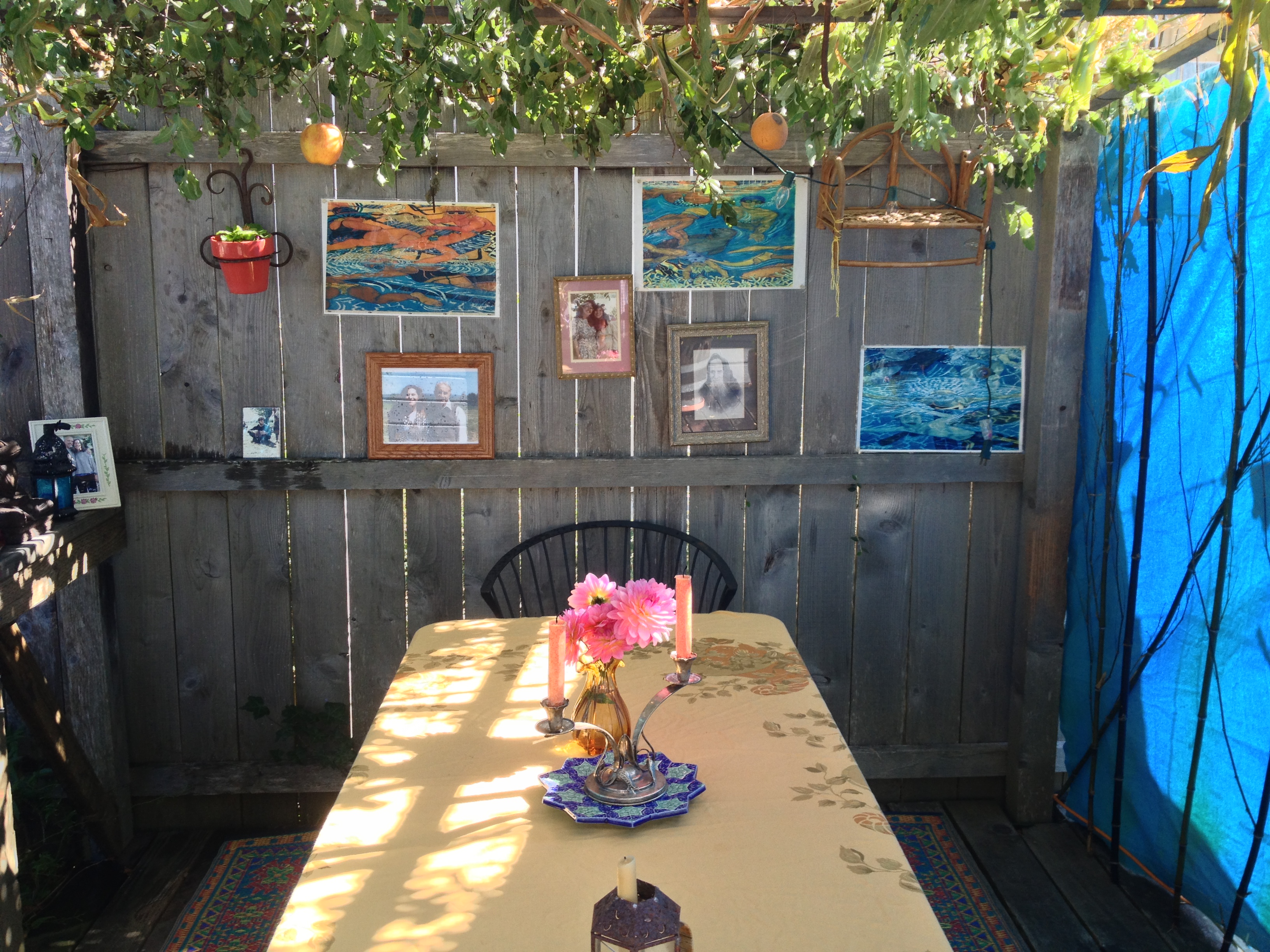
Tu B’Shevat is a Jewish holiday that honors the first rising of the sap in the trees. Folks usually gather and celebrate fruits from trees and also plant trees at this time. We celebrate the holiday in various ways, but one of the things we do is to have a special meal called a Seder. Seder is a Hebrew word that literally means order. It is also a Middah. The Seder is an ordered/ritualized series of blessings over wine and fruit. One of the beautiful things about this meal is that nothing is killed for it. All that you consume is something that is a fruit, including the wine. It’s an opportunity to just receive without having done anything other than be lucky enough to live on this planet full of wondrous plants and trees who offer their fruits to us.

Four Worlds Meditation and Blessings for Tu’B’Shevat:

A note on Blessings. In our tradition between the blessing and the action of the blessing, there needs to be nothing else. The blessing is a link between the world of Ha-Shem, the world of Holiness and our actions in this Assiyah world. We say a blessing then we do the action. We do not speak or do other things between the two. This practice requires conscious effort and tonight, we invite you to practice this with us. Our teachings and thoughts will come before each blessing, followed by some silence then the blessings, then the action of either eating the fruit or drinking the wine.

Assiyah: World of Physicality

Yitzirah: World of Emotions

Beriyah: World of Intellect

Atzilut: World of Spirit

Assiyah: World of Physicality~Earth My Body

World of action, physical world represented by earth and the season of Winter. We eat fruits with hard outer shells and soft insides such as: pomegranates, walnuts, almonds, coconuts, pistachios, chestnuts, hazelnuts, Brazil nuts or pecans. In Winter we layer ourselves in clothing to protect our bodies. The fruit is similarly covered in a shell. Removing the shell, the klippot, exposes the fleshy vulnerable inside. The shell conceals and protects. As we Bless and experience this first fruit of our Seder, be conscious of the shell of the nut and the shell that holds your insides and protects but also covers your essence. Quietly take five fruits of this kind, at least one of which has a shell. In your left hand hold the hard shell closed nut. In the right hand hold the fruits you will bless and eat. Be still with each as we breathe and I will lead the blessing which you have in front of you so you can join me or you can stay in the silence and just say Amen and then eat your fruit.

Yitzirah: World of Emotions~Water my Blood

The most vulnerable world of formation from our physical to our emotional. This is the place of our inclinations to be creative, to feel, to be moved by what is without and within. We speak and sing and dance and create from this place. This world is represented by water and the season of Spring. We remove some of the layers as we draw closer to the Holy Heat Source as well as the physical changing of the seasons. We can expose ourselves and not be injured in the doing if the climate is right. We eat fruits that are soft on the outside with hard pits on the inside. We remember that even though we can be creative and feel and speak and sing we still have a hard pit inside, part of it is our personal ego, part of it is the seed that connects us to the Divine and it is protected and hidden. We eat fruits such as: Olives, dates, cherries, persimmons, apricot, plums. As previously, please take five fruits and put one with a pit inside in your left hand and the others in your right hand as we breathe and prepare to bless and partake of these fruits.

Beriyah: World of Intellect/Creation~Air my Breath

This is the world of creation and thoughts and our Lev Mind, our shared heart/mind. The element is air and the season is summer. In this realm, we have let go of our shells and our hidden inner shell or pit. We are soft and safe and vulnerable as well as whole and cared for and can be experienced whole. We are at one with each other and with all of creation. In this place we do not notice the distinctions so much as we recognize the UNITY that runs throughout all of creation and all of us and we partake of that unity completely. We are integrated. We eat fruits that are edible entirely, figs, apples, raisins, pears, quince. Hold some of each of these fruits in each hand as we breathe and bless and partake of these fruits.

Atzilut: World of Spirit/Emanation ~Fire my Spirit

This realm is a purely spiritual one. The season is Fall, when all is ripe. This world cannot be represented by any fruit, it can be experienced through our sense of smell perhaps and our memories as well as by our inner linking and awareness of The Holy One’s love, mercy and wisdom. We can engage in prayer for this fruit from the place of our praise of the Source which renews all of creation continually. With both hands open hold your empty but full hands and be present as we breathe and partake of the spark of emanation that is not in physical form that we can see and touch but which is nevertheless present in our palms and in our hearts and in this moment.

Blessings For the Tu b’Shvat Seder:

כאשר אני מברך, יהי רצון שאהיה צנור להשפיע חיות לכל הנבראיםואף לדומם, צומח, חי, ומדבר.

Ca’asher ani m’vareich, y’hi ratzon she’eh’yeh tzinor l’hashpiya chiyut l’chol hanivra’im – v’aph l’domeim, tzomeiyach, chai, um’dabeir.
When I make this blessing, may I become a channel for renewed divine energy to flow through me and go out to all creatures and creations – inanimate, plant, animal and human.

 On wine and grape juice:

ברוך אתה יי אלהינו מלך העולם, בורא פרי הגפן

Baruch Atah Adonai Eloheinu Melech Ha-Olam Borei Pri Ha-Gafen.
Blessed are You, H’, our G-d, Sovereign of the Universe, Who creates the fruit of the vine.

For all fruits from permanent trees, such as apples, oranges, and peaches, even if these fruits are dried; also grapes, raisins, and all nuts (except peanuts, which are a legume):

ברוך אתה יי אלהינו מלך העולם, בורא פרי העץ

Baruch Atah Adonai Eloheinu Melech Ha-Olam Borei Pri Ha-Eitz.
Blessed are You, H’, our G-d, Sovereign of the Universe, Who creates the fruit of the tree.

These blessings were written out for me by my dear friend Caroline Isaacs who I co-led the Meditative Seder with.

©Nicole Barchilon Frank

Hoummous ~ Hummus ~ Who?Moose

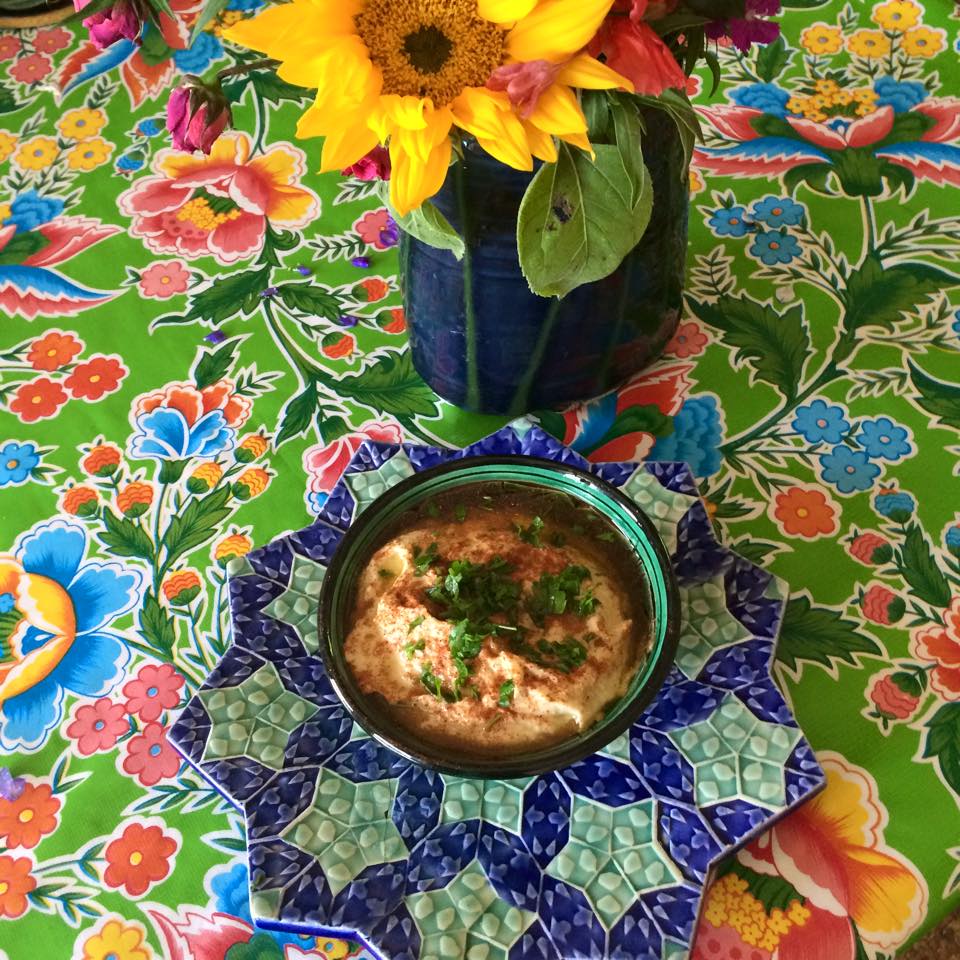
Hummus served right, in a beautiful Moroccan bowl, with Henry's Olive Oil, paprika and chopped parsley from my garden. The plate underneath the bowl was made by my brother Paul Barchilon
Hummus served right, in a beautiful Moroccan bowl, with Henry’s Olive Oil, paprika and chopped parsley from my garden. The plate underneath the bowl was made by my brother Paul Barchilon
  1. two cans (16 oz) of drained organic garbanzo beans (Westbrae Organic is my preference) when you aren’t soaking and making fresh beans, which is always better, but the Westbrae brand is very good.
  2. juice of 4–6 lemons depending on the juiciness/size of the lemons
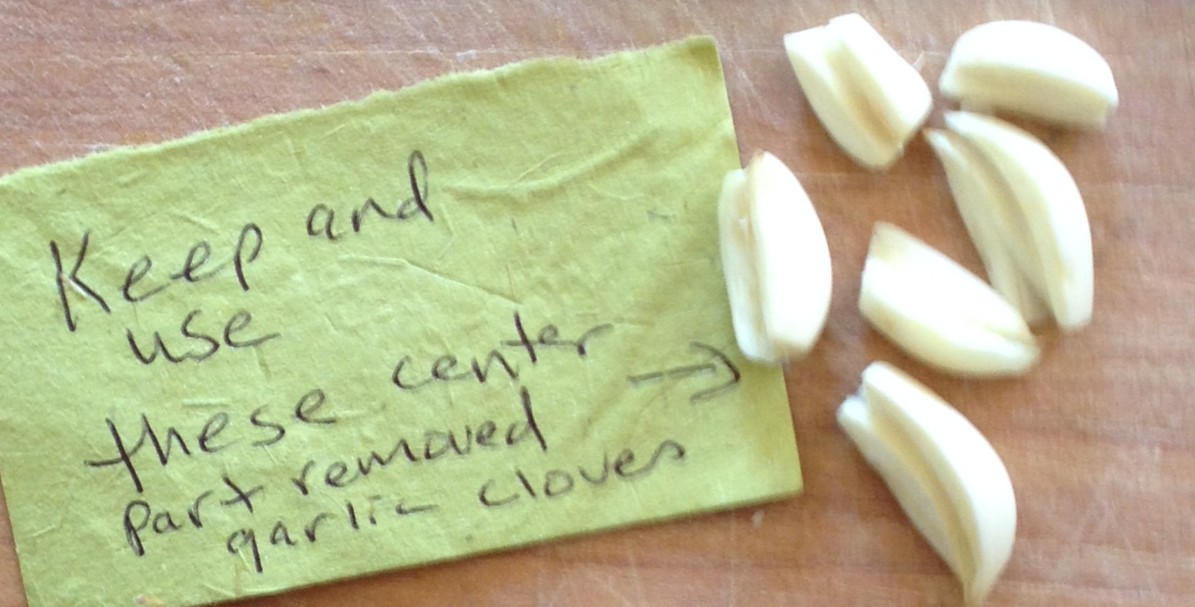
  3. many cloves of fresh garlic, half to a full bulb’s worth with the centers of each clove removed. (see picture at end of recipe)
  4. ¼ cup or more of organic tahini (roasted or raw)
  5. ¼ – ½ cup of water to make the blender deal with all this (I went through a blender a year until I got a Vitamix, guaranteed for life and so far six years without a problem)
  6. ¼ cup or so of organic olive oil
  7. salt and pepper to taste
  8. chopped parsley
  9. paprika for color on top
  10. Za’atar if you can find it (Israeli herb mixture, try ordering on-line or ask everyone going to Israel to bring you some home)

The trick here is lots of lemon and garlic, if you use less than I recommend it won’t taste as good!

If you have the time, soak some organic chickpeas overnight, then boil for an hour and use those instead. If you don’t, it’s fine to use the canned ones. Rinse them thoroughly to get off the canned juice goo they come in. Blend all beans, garlic, lemon juice, tahini, water and ¼ cup olive oil, salt and pepper together in the blender. Start on your lower setting and build up. You don’t want your hummus too liquid and I like mine very blended. Taste and adjust, adding more lemon, salt, garlic, etc…

Discard, Dont Use!Pour out into a bowl for serving and then liberally douse with paprika, cover the entire surface with it, then drizzle olive oil over that and sprinkle freshly and finely chopped parsley or the Za’atar all over it. Serve with dinner, lunch, bread, and crackers or make sandwiches with artichoke hearts, tomato, lettuce, Dijon mustard and hummous, on French bread is best. (This is one of my favorite sandwiches.) This Who?Moose will keep for a week in a glass container.
Keep and Use
This recipe is in my cookbook, Divine Delights, Sephardic, French & Persian Foods ©2012 by Nicole Barchilon Frank, which is being updated and will be available for purchase here on this website in the not too distant future.

La Pêche

Peaches from Neukom Family Farm

Sounds like pehhsssssh
long and soft on the “s”
also means fish
pêcher = to fish

your peaches have hooked the sun
they swim in my mouth
Heaven encountered
by buds on my tongue
I hold this warm ball of sunshine
and the aroma swims up and dives deep
into the valleys of my being

this peach/pêche
fruit of a mother tree
tended by you
pruned of what is old
or twisted, broken or no longer of use

rainwater and dew blessed
river to cloud to drops descending down
rivulets running down, down to roots
tickled and caressed
by small creatures and many legged ones
speaking the language
of the earth and singing songs
in a language only the roots and leaves
know the secret of

top to bottom, soil enriched by your
sweat and your love
this peach has hooked the
sun who is only about 94.4 million miles away
no distance really
this peach has heard the melody of the planets
in its brown, twisting, dancing deep roots

This Neukom Family peach/pêche
is a treasure beyond measure
essentially enlivening and ennobling
the Creation and the Creator

I’m swimming in a Holy River, peachy
thanks to you, co-worker with the
Holy One, Creator of La Pêche

I’m colored completely in a soft peach light
curled up and held eternally in a mesh and web of delight
Peachy thanks to you!

© Nicole Barchilon Frank