Category Archives: Practice

Angel Song for Healing and Before Bed

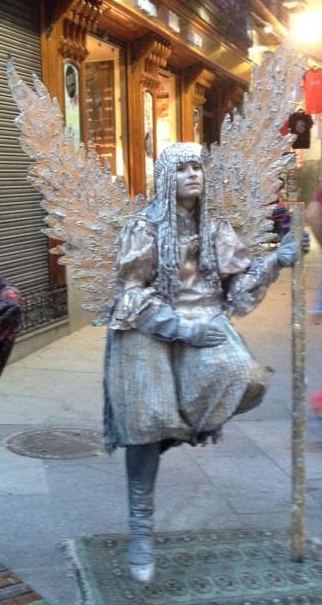
Madrid Angel

“In the name of the Holy One, the Holy One of Israel, May Michael be on my Right and on my Left be Gavriel, Before me be Uriel and at my Back be Raphael. Above my head and below my feet Shechinah-eyl.”

This is an adaptation from the prayer said before going to sleep in the Jewish tradition. It is one of several prayers that are part of what is called the Bedtime Shema. My dear friend Arik Labowitz has the Hebrew melody beautifully recorded on his CD Simu Lev (track 10, called Angel Song) and you can listen to it on his website or buy the CD. I play his music all the time. The English quote above here is slightly different from what you will find in some prayer books. Hebrew to English never translates perfectly and this is what I sing and sang to my children before they fell asleep. This prayer or any prayer or ritual practice of protection and love spoken ritually and regularly for young ones will help in so many ways. Nightmares just don’t have as much of a doorway in when you have surrounded yourself or your child with four guardian angels.

I also sing or chant these words over and around folks before and after medical procedures or if they come into my home for healing. It is very soothing. It is good to teach to others. I will look into recording a voice memo here and uploading for future reference so you can see the way I sing it. Just saying the words in any way you want is a good idea.

Whenever you see any word in Hebrew or translated into English with the “el” in it, this refers to the Divine. So El is one of the oldest, if not the oldest, Hebrew word for a Divine being. Please see Why Ha-Shem, Not Naming the Divine post for more detail about naming the Divine. In brief, we don’t name the Divine in the Jewish tradition, we use various kinds of descriptors. There is one name used in the Torah which is made up of the four Hebrew letters, but this configuration of letters has no vowels and the original pronunciation for these letters was only passed down orally from High Priest to High Priest. No one except the Cohen Ha-Gadol/High Priest ever knew how to pronounce this name and only did so once a year. See articles on Yom Kippur. This name is called the Tetragrammaton since it is made up of four Hebrew letters. It is inaccurately translated and pronounced sometimes as Yahweh or Jehovah or some variation of this.

Additionally, all Hebrew words are linked to their roots and each root spawns many, many words, which when you know the root for those words links you to a whole system of interconnected words and which informs you about the deeper meanings of a word. Translation is always tricky.

“… Translation, above all, means change. In Elizabethan England, one of its meanings was ‘death’: to be translated from this world to the next. In the Middle Ages, translation meant the theft or removal of holy relics from one monastery or church to another…” ~ Eilliot Weinberger

And my favorite teaching on taking Holy works and trying to understand them literally.

“The surest way to misunderstand revelation is to take it literally, to imagine that God spoke to the prophet on a long-distance telephone.”

~ Rabbi Abraham Joshua Heschel

Even if you cannot access it in the original language that doesn’t mean you cannot benefit from the teachings. I just like to remind folks to think of translation as a kind of very adept word yoga, with lots of bends and twists and flexibility built-in so that you don’t think there is ONLY one way to engage with a word or concept. When learning about the Hebrew prayers and practices and adapting them for any person, regardless of their religion or ethnic or cultural background, it is important to remember that the energy of the word or the prayer is what matters for those who cannot access it in the Hebrew. The other important thing to keep in mind is your kavannah/intention. If you set your intention the meaning will fall into its proper place.

Each of the angel’s names have meaning and can be translated variously as:

  • Michael is the angel of love/mercy. Mercy of El, the energy of love angel or the angel of mercy.
  • Gavriel or Gabriel is the angel of strength, so strength of El or energy of courage and boundaries, armor, protection.
  • Uriel or Ariel is the angel of light from the Hebrew word Or/Light. So, Uriel is the angel of vision and light.
  • Raphael is the angel of healing, the word for healing in Hebrew is Refuah

So, please engage how you are comfortable and for further teachings on this please see Rabbi David Cooper‘s book God is a Verb (order if from your local bookstore). Much greater detail than what I’ve given is included there and he has an excellent Archangel Meditation on page 144 of this book.  He also has CDs and other sound recordings on angels and tools for those looking to connect more deeply. Rabbi David is a master of Kabbalah and I use his materials all the time.

I have had personal experience with the Archangel Raphael and always experience his presence as being a warm wide-winged embrace that I sink into. Raphael is always a being I fall back into or sink backwards into. There is a profound feeling of trust and warmth. When I pray for others I imagine the wings of Raphael being so big that the person is completely held inside this Holy Being and is comforted and well there in the protecting and deeply healing embrace.

May you find comfort in these practices and please feel free to ask me questions and go and study more!

Introduction to Mussar

We are Holy at our core

We can uncover the core

Our difficulties, stresses, and problems in this life are the core curriculum of our lives, this is our spiritual homework

Acknowledgment: This extremely introductory and broad overview of the topic of Mussar is the result of eight years of study with my teacher Caroline Isaacs, my time with my Mussar sisters in group study, reading, reading, reading and more reading as well as studying great teachings, some of which are mentioned here. Please see all the links for more in-depth discussion and direction. This piece is truly meant as an introduction to the topic and I hope it stimulates much further study.

Mussar is introduced in Ba-Midbar/Exodus also in Devarim/Deuteronomy

Ha-Shem/The Name (see Teachings, -Naming the Divine?Why Ha-Shem article on the use of this word instead of the word God). Ha-Shem literally means The Name and it reflects the concept in Judaism that you cannot quantify or confine the Divine. It is unnameable, infinite and vast. Ha-Shem is not like my name or yours.

Ha-Shem gave us Mussar. Mussar can be translated to mean training/to train. It is also understood as the practice of Jewish ethical work. Mussar is a series of practice tools and teachings for learning to walk our talk. I often describe it as a way to shine up my soul, to work at scouring, lifting, cracking the code on the patterns, barriers, obstacles that are in the way of my greater self/soul/heart.

When first trying to describe it I wrote this short poem:

I’m trying to make my soul
shiny, shiny bright
so that everyone can see
its light

Mussar is practical and doable.

The main work of Mussar involves engaging actively  and becoming aware of the many middot/measures of energy/Divine flows that operate in our world and that we can work with to live with integrity, pursuing goodness and justice. The Hebrew word middot cannot be easily translated. The idea is that there are flows or measures of Divine Energy or Qualities that move through all of us and the world. By connecting with them in their essences and learning to identify them and dance with them or use them to help us with our lives, we can change and improve ourselves and our lives and the lives of those around us.

There are several key or central middot. Middot is the plural for middah. For the purpose of this article, using the word measure or flow of energy is the best way to conceptualize this idea. You do not have to believe in a Holy Being to practice Mussar or to understand the middot. They can also be translated as attributes, flows, energies, characteristics, or paths. Some of the central middot are:

Humility, Compassion, Faith, Trust, Generosity, Moderation, Equanimity…etc..

A student of Mussar attunes to each of these Middot for a specified period of time, usually no longer than a few weeks and studies this energy through teachings and the techniques described below. The student looks for how one is involved with this attribute and where one falls on a continuum of this particular energy. The more advanced student looks to harmonize and balance themselves with this particular energy and how to use it to improve one’s conduct and self. Throughout the year one goes through a cycle of these middot and re-visits them again and again throughout out ones lifetime of study.

Important Mussar Texts in Antiquity:

  1. Talmud
  2. Pirkei-Avot, Ethics/Teachings/Sayings of our Fathers
  3. 11th Century Spain, Medieval times: Chovot HaLevavot/Duties of the Heart by Rabbi Batya Ibn Pakuda,
  4. 12th Century: the RaMBaM (רמב”ם – Hebrew acronym for “Rabbeinu Mosheh Ben Maimon“/Maimonides continues this work with his Mishneh Torah
  5. 16th century: Yiddish translated into Hebrew Orchot Tzadikim/the Ways of the Righteous and then the Tomer Devorah/Palm Tree of Devorah by Moshe Cordovero
  6. Then into the 18th century Mesillat Yesharim/The Path of the Just by Luzzato also known as the RamChal.

There was a schism between the flowering of Hasidism/ecstatic worship of the Divine, deemed “wild” vs. the counter to the Hasidic movement. These folks went into Mussar practice and were called the Misnagdim. The Vilna Gaon was the main proponent of this and very opposed to the ecstatic Hasidic movement, in the 18th century. In the 19th Century Rabbi Yisroel Salanter pulled all the varied sources together and created and codified a system for Mussar study:

  1. Mussar Steibel (home practice)
  2. Practice Melodic Chants of Holy Phrases “with lips aflame”
  3. Don’t study alone, study with partner.
  4. Cheshbon Ha-Nefesh=Accounting of the Soul, keeping an honest journal of daily encounters and behaviors that one did and looking at them through the lense of whichever Middah one is studying.
  5. Hitpahalut: impassioned chanting of a melody, prayer or Holy phrase for 20-30 minutes for 30 days.

20th century Mussar leaders/teachers: Rabbi Abraham Twerski, Alan Morinis, Rabbi Arthur Green and many others. See The Mussar Institute.

There are real tools in Mussar practice and ways to confront our reflexive, seemingly innate and hard to change behaviors and inner inclinations. These tools work at a deep level. This is Soul Work, the deepest kind of work and central to this work is the idea that:

I am a soul NOT I have a soul

Perfecting our soul/our beings is a personal choice and everyone has their own path. There is no expectation of one size fits all or we have to all walk the same path, nevertheless Mussar practice is a tried, true and well-developed practice that has tremendous momentum, teachings, teachers as well as practical and clear results.

This is a 24/7 practice, the possibility to do it exists all the time. I think about it this way. I can put on my Middah glasses, and my Mussar cape, so that all I see and all who see me are encountering me fully present and practicing. This then reinforces and develops my awareness of my growth as a soul.

Addressing the Nefesh (first of four levels of our souls) and on up through all the levels is one part of our Mussar practice: See post on Four levels of the Soul in Tu B’Shevat Article (insert link)

Whatever we encounter or whatever obstructs us can be looked at through these Middah lenses. They may show us our particular and unique challenges and illuminate our character traits, and/or they can be indicators of the measure of the middah we are either in balance with or not.

Mussar is a striving to be more centered and includes the recognition that all of our experiences and behaviors can be measured on a kind of continuum that is not a place of judgment, but a place of informed awareness with an intention towards improvement. We will never arrive, but we can always keep practicing.

This practice, when done with devotion can undue the teem tuum Ha-Lev /stopped up heart). It is amazing and transforms one.

Our goal is Shelemut/Wholeness, but we won’t attain it necessarily. We can continue walking towards it, shoot our arrows and aim for the center which leads us to more and more moments of connection and experiences of connection and Holiness.

Mussar is a Matan/Gift from the Holy One to help us do the work

Awareness Practices:

“Take Time, Be Exact, Un-Clutter the Mind”

~Alter of Slobodka

This approach helps create a barrier between our impulse and our acting out or response to that impulse. SLOW DOWN, TAKE TIME.

Notice where you react to the teachings or to what others say, have a daily mussar journal, just note things, don’t judge yourself for reactions. This is about becoming aware of the contours of who we are and what the issues are. Mussar is not about FIXING IT. It is a subtle and very deep practice that really is about being a soul, not having a soul, being someone who is aware, not making ourselves aware. Over time you will see patterns and can work with them or just being aware of them will help them shift.

This is not a beat ourselves with horsehair whips and wear clothing that is full of needles so we bleed and remember how terrible we are kind of practice. It is not based on guilt, but on taking responsibility and awareness.

This practice is rooted in a core Jewish belief based on the idea that our souls are pure and that there is junk that obscures or occludes our souls. We can diminish the murky mess and crack through the hard shell that surrounds our souls. We can liberate and make visible the innately glorious and sparkling nature of our souls with OUR PRACTICE.

In Malachi 3:3 “He will sit smelting and purifying silver, he will purify the children of Levi and refine them like gold and like silver and they will be for him.”

When is the silver smith satisfied with the quality of her smelting and purification? When it is so clear and pure that she can see her face in it.

Basic Practice Outline:

Daily:

  • Morning Repetition of a simple saying related to the middah one is working on, this is said after the recitation of the first blessing we say upon awakening Modeh Ani L’fanecha.

  • Awareness throughout the day of the Middah and noticing of our interactions as mentioned previously.

  • Evening: writing down, briefly what you saw related to middah  and our selves in the day, any anecdotes or interactions that relate anywhere on the continuum. Just jotting them down, this is not about analyses. It is a practice without judgment. Re-read materials, jot down issues or highlight stuff you want to ask about or work with a partner on.

Weekly:

Check in for an hour or more with a partner or a group and go over materials, answer questions, check in, share from journal, not about therapy in traditional sense, return to the materials and use them to guide your encounter. Take turns being in charge or choosing a teaching to study.

Monthly:

Class with a Mussar practitioner or Rabbi and other students, discuss what questions came up during your study, share experiences, switch to a different Middah for the next month. Never spend more than a few weeks on one Middah.

All of the teachings and texts used here are excerpted from these and other texts,  and here are some links to those for further study:

©Nicole Barchilon Frank

Seeing Others as Holy Guests in our Hearts, Communities and Homes

Touching across differences of size, age and perspective

“You shall appoint magistrates and officials for your tribes, in all the settlements that Adonai your God is giving you, and they shall govern the people with due justice. You shall not judge unfairly: you shall show no partiality; you shall not take bribes, for bribes blind the eyes of the discerning and upset the plea of the just. Justice, justice shall you pursue, that you may thrive…” (D’varim/Deuteronomy 16:18–20)

I feel bound right now, bound to hold fast to an ideal of Justice that isn’t just about me and those I know and love. Bound to find a way to see the Other as a guest, a relative, a wounded being whose fate and mine are inextricably bound.

This binding is not restrictive, it is self-imposed and a discipline, I daily remind myself about. When, in our small but complex hamlet, we engage in dialogue and dissent forgetting to be bound by this ideal of Justice we are crippled in our attempts to find resolution. Each one of us is responsible for how we behave and what we say and do in a public arena.

Whether we rent or own a home or whether we find shelter wherever we can (which sometimes means having no shelter and being exposed, confused, hurt and angry). We have to remember that until we see those who are different from us as Holy Guests who may also be wounded or broken, we will not manage to live and work together well.

Finding the balance between our own needs and boundaries and the needs and boundaries of others is a lifelong challenge. When we forget to connect to our higher/deeper ideals and self as we walk, talk, live, work, breathe and love we move towards becoming that which we abhor.

So, in a public way, let me take to task some folks for perhaps loosing sight of something precious. To all those who work in public arenas who have forgotten and who are reading this, I know you are frustrated with local politicians, complex and needy constituents and various advocates for differing positions. You have good reason to be, as do we all, AND it’s important not to lose sight of the end goal, Justice for all.

Polarization is a natural force when there are different people working on a problem from completely alternate or differing positions. The hard part is to recognize that we aren’t actually interested in, nor will it be useful, to create a nuclear reaction. Tearing communities or cells apart involves splitting up or getting “rid” of things. Convenient as it might be to imagine removing from the discussion all those who think, feel and see differently from us, it just won’t ever work.

We cannot shuffle or blast away with angry words in print or in the public domain those we dislike, disagree with or are disgusted by. There is no where left for us to shuffle them.

They live here with us. Often folks without a home will have a pet and this is often viewed as being wasteful or wrong by folks who are housed. For some, owning a pet seems like a luxury..”how can that person ask me for money for their dog food?” I have had a few hard times with loose dogs about town or on the beach (where they destroy habitats for small birds if not on leashes), but not letting a wild thing run wild seems cruel also. This is another example of a complex situation that requires intelligent and caring dialogue and thought.

I love most creatures and want them to be well cared for in their natural habitats or with their human parents.

When you are without shelter a dog can be your only defense against predators. Living on the streets or woods involves interacting with predators (human and others as well). Animals are sensitive to the moods and needs of those who feed and care for them. Even pets, whose owners are less than responsible with them, are still loyal, forgiving and often endlessly willing to try again for love and they will still protect their person from harm by another.

There are many studies indicating the value of having a pet around. There are uses for pets in many therapeutic contexts, which leads to the conclusion that having one around helps folks in more ways than we can see. They are used to combat depression, help people with cancer or terminal illnesses and also as service animals for the visually impaired or otherwise-abled who need assistance. We have a right to impose and advocate for leash laws and restrictions on animals in the public domain so that everyone is safe. We don’t have any moral grounds for denying people the unconditional love that many pets provide.

It is beyond ridiculous and a travesty that we can’t find a home place for the people who need one after all this time. It’s a real pain in all of our behinds, brains and hearts that we also have to figure out what to do with their dogs as well. Unfortunately that is our situation.

If we lived somewhere other than most folks reading this do (meaning you have access to a computer and are literate and have the time and money to spend reading a blog vs. working long hours to stay alive or find food or shelter), then we might have more perspective on poverty and those who don’t have shelter. We live where we do though and perhaps have forgotten to see everyone as precious. We need to remember who we are and what our goals and values are. Even when the people we are working with forget this, we have to take responsibility for our part, our voices and our behavior and continuously push the Justice, Justice button until we get to that place.

I’ve worked in the past with many a young person. One seemingly had no control over abusive behavior and language and got into a lot of trouble as a result. I regularly reminded this person that the only thing we can control is ourselves and our responses and actions. My work with this person involved helping her connect with what she was really feeling, which was usually sadness and then to work from there to find solutions that would enable her not to lash out at the folks near her.

I cannot change what anyone else thinks, feels, believes or does. I can only work to discipline and remind myself, daily and many times a day, that the world I want can only come about when I treat everyone around me with respect, dignity, the benefit of the doubt, and clear and loving communication. I also have to include my family and myself in that recipe and make sure I protect those who are closest to me. It’s not ever easy or mindless and requires a constant effort and it requires PURSUIT. The Torah doesn’t say look for justice or think about it, it says PURSUE it.

Anything less will result in more pain, sadness and confusion. So, let’s remember to pursue and seek out and recognize that which is beautiful, true and precious in those we have the most trouble with. From there, we will make progress that is lasting and real. I honestly believe we will.

~Nicole Barchilon Frank lives  in a lovely and complex hamlet and won an “Optimist Award” from her teacher Mr. Sparm, (yes we used to call him Mr. Sperm, but never to his face) for a paper she wrote about ending world hunger in her sixth grade class about 39 years ago, some things never change.

“In lieu of …..”

Tzedakah box (Pushke), Charleston, 1820, silver, National Museum of American Jewish History.

“In lieu of…,” these lines often appear in obituaries and funeral programs, encouraging people to make donations to various charitable organizations in memory of the person who has died. In the Jewish tradition, we do not want to spend money on death and prefer to give money to the living or those in need. This doesn’t mean that there is anything wrong with the ways of others. The idea being that when you donate money to an organization in the name of someone no longer on this side of life, you enable them to still be doing a mitzvah (good deed/good work). I love this idea and regularly encourage folks to give in honor of one they are missing. This makes the act of suffering into an act of offering and giving. Even small amounts, a few dollars to a homeless shelter or a kid’s soccer team, the amount is not important. What is important is the act of giving in the memory of someone. Also traditional is to give on that person’s birthday or the anniversary of some special event for you and the person who is no longer present.

This holiday season, consider giving “in lieu of” to a local non-profit organization. Instead of buying the person that already has everything a small gift, contributing instead to making someone’s life better in honor of the person they love is a great gift! I am a firm supporter of shopping locally and getting and giving gifts. I eschew large chain stores and endeavor to support all the local Arcata vendors and other smaller stores in our area; Northtown Books, The Garden Gate, and Belle Starr to name just a few. So, for the folks on your lists that need a gift or want one, by all means shop local, and get something for them. For folks who do not need another sweater, pair of earrings, or cute something or other, make a donation to a local organization in honor of them or in memory of a beloved person precious to both of you.

This idea is not mine. The rabbis I know encourage us to put money in our Tzedakah boxes whenever we have a pleasurable experience, or hear good news, or before any joyful event. A Tzedakah box is a regular feature in any Jewish home or congregation. It is where you place coins, or bills and the money is given away to others in need anonymously. You get no credit and the person receiving has no idea which particular family or people put money in. It is traditional to put some money in the box before lighting candles for Shabbat or a holiday. We teach our children about this practice and most young folks have memories of making a Tzedakah box in religious school, or of seeing their cardboard or other media creation proudly displayed on their parents’ mantles long after they’ve left home. The box is not important, but the act of regularly depositing small change or larger bills into the box is.

Tzedakah comes from the word Tzedek in Hebrew and has many meanings. It doesn’t mean charity even if it is most often translated that way. It is better translated and linked to the English word “justice.” Charity, connotes choice; when I have something left over to give I make a donation. Tzedek is an entirely different concept. We are instructed in the Torah to pursue justice all the days of our lives. The word used is Tzedek.

The injustice and imbalances in the world are ours to fix, there are no ifs, ands or buts about this, once you accept the mantle of caring for the planet and those on it.

It is my job to fill the Tzedakah box and to pursue justice, yesterday, now and tomorrow. Even our final act as Jewish folks is supposed to be holding a coin and depositing it into a Tzedakah box as we chant a prayer. Dying consciously, for those who can, depositing/offering and continuing the work of helping to create justice in this world, doesn’t have to be a practice reserved just for moments of transition. As the rabbis suggest, make a donation when you hear good news from the doctor, or when you learn of a new birth, or if you have a particularly delicious kiss or encounter…Turn your joy and your love or your sadness or loss into goodness for others this season. Elevate your giving into the world beyond as well as making this one better.

 Nicole pursues justice, gives, thinks, shops, prays and loves locally and hopes you will do the same!

Column for The Mad River Union: Published Wednesday, December 18, 2013

Once Upon a Time in a Faerie Palace….

There's a Flower Fairy hiding inside...
There’s a Flower Fairy hiding inside…

Recently, I spent several hours on the banks of the Salmon River building faerie palaces with small children. This was not a planned event; usually wonderment unfolding is an unplanned event. It’s a “be present in the moment” kind of experience. I’ve lived in this area for over 20 years but this was my first visit to the river near Somes Bar, which is a sad-admission moment.

I was there to celebrate a good friend turning 40. He and his family reserved a group campsite for several days and folks came and camped with them or just came for the day. My wonderment unfolding companions were four little girls, ages 3-7 and one little boy, perhaps six, and the faeries themselves, of course. It was a magical day for me. It was also quite a lot of work.

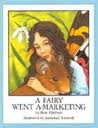
I generally am drawn to little folks and invisible beings, it’s just the way I am, so instead of hanging out with my husband or the wonderful adults there I spent the majority of my time in the river with lovely demanding children. One little girl, an old buddy, was happy to see me. She wanted me to sleep in her tent with her parents, brother and dog and she was sure they wouldn’t mind. We have a long faerie history together. She is a lover of all things faerie or fey and I regularly send her little offerings, from that realm. A few years ago I sent her one of my favorite books, A Fairy Went a-Marketing by Rose Fyleman and illustrated by Jamichael Henterly. If you don’t own this book, go get it right now, I’m serious. Northtown Books always carries it. It is an extraordinarily important book.

Fairy went marketing

Back to the land of Once Upon A Time…. Two faerie lovers decided to begin working with wet river sand, stones, sticks, leaves and water in order to construct a special magical place. Pretty soon, other little ones wanted to help. The little girl I was initially helping didn’t want younger helpers, only me. So, I began to split my time between several small children creating an avenue or village of faerie structures. Each young person was wishing for assistance with their constructions and didn’t want to share palaces or constructions. Each of them had their own ideas. At one point, the conversation came around to a discussion about skills. One of the older children had more ability to make things and this led to a slight shunning or dissing of the younger ones’ skill set. This kind of attitude is not conducive to faerie enterprises.

I pointed out that every person has special skills and talents that they can offer to this project and to life. I asked them to think about and share one of their own special skill or talents. I asked them to guess what my special talent was. They were only puzzled for a moment and since we were about an hour and half into things at this point, their responses were: “helping people” or “faerie” stuff. I felt seen by my companions; a magical moment of the best sort. I responded to their answers with: “My special talent is kindness, it is something I have to work hard at all the time” And then we resumed construction.

One of the younger girls said that she had never built anything before and didn’t know how to build a sand-castle or a faerie palace or anything. Whether this was true or not, wasn’t relevant, it’s how she felt. She was so eager and so sad at the same time. A part of her afraid that there was something wrong or missing about her. She was a tiny fey kind of thing. She really looked like she belonged in the land of faerie, so palace building seemed like a perfect pairing. She could have been a faerie for all I know, faeries are tricky and love to fool folks. We dug into the wet sand together. I brought her rocks and sticks. She found leaves and began to build her first faerie home. Her fear vanished, almost immediately, in the act of doing. She found her niche. That was a spectacular moment!

The one boy felt very left out throughout much of the process. He told me so and repeated his feelings several times. The girl energy was pretty fierce and the ratio was off. This boy was not squirting water guns or splashing in the water, he was wanting to help build faerie palaces. He was particularly drawn to the beautiful young girl who was closest to his age. The girl he wanted to work with is very delicate and is someone growing into her generous self, but she wasn’t quite there yet. She was insistent that her structure was the best and that it was secret and not part of the greater avenue of villages. She had zero interest in sharing me or her construction with the young boy or any of the other younger girls.

Young and unjaded, these children expressed themselves fully and shamelessly. Luckily, I am fairly or faerily adept at handling complex emotions and interactions and definitely familiar with dynamics like this. Besides faerie construction, my time on the river bank involved many teaching moments. Making sure that each child got some of my focused singular attention and some of waiting for me to be available was just one. They were given encouragement to work together, to trust their own sense of what should be done or just to be patient. The faerie fort that the young man built was ameliorated by the young builder who “didn’t know” how to build anything. She arranged the rocks I brought her in a large circle of stones around his fort. This was something he wanted help with. He was very into having help and sharing his construction and finally felt happy.

And, of course, the dogs and the humans all invariably knocked parts of everyone’s structures down. The movement of the water and flow of traffic all contributed to the inevitable collapses and structural shifting. So, I told them: “You know whenever something breaks or shifts in your faerie dwellings it is because the faeries themselves liked that particular part so much they took it to the Land of Faerie.” This was a new concept to them. Parallel universes are always a good idea to share with children and they are core to who I am.

In the Land of Judaism, where I mostly reside, we have this structure of parallel realms. The Holy Temple on earth is a mirror image of the Holy Temple in the Heavenly Realms. Its construction, desecration, destruction and re-dedication all happen in two places. This idea is central to my life. Everything I do in this realm has ramifications in another realm. My prayers, which bridge the two worlds, have unseen and unknowable effects, but for me they are the Holy Temple walls I am rebuilding. I need the world to be a reflection of Holiness and I have to construct that. It’s not up to anyone else to do my part of the job. I have a unique set of building skills that I bring to the project. Everyone does, when we engage with clarity and intention, wholeness unfolds.

Whether I am involved with children, my husband, my friends, a clerk at the store, or my cats, all of my interactions are opportunities to craft something precious, fine and Holy. I had such great teachers and builders with me on the Salmon River Bank Faerie Row Construction Project.

When I’m awake, I see that I am surrounded by extraordinary companions. I am deeply conscious of how truly blessed I am as I endeavor to mend and build a structure for healing here and now wherever I encounter brokenness.

Nicole sends her faerie blessings to you from her cozy home, where she regularly endeavors to share and create the beauty, kindness and goodness she sees everywhere, and which are gifts from the Realm of the Holy and the Fey.

~ Just Being Frank column published in the Arcata Eye on Wednesday, August 22, 2012 © Nicole Barchilon Frank