ShaKia, my newish Granddaughter and I, she loves this recipe and I promised her I’d upload it as soon as I got home from visiting with her and my daughter and her intended.
Fresh Salsa makes any meal much better. This is very easy to make. The trick is to cut everything really tiny and to have the cilantro clean and dry. Prepare the garlic the way I have already outlined multiple times (Perla’s Peppers, Esti’s Parsley Sauce). This Salsa will keep for about two days at the most. It’s really best fresh. If you want to use if for longer, cook up the remainder and blend it up and keep if for a few more days in your refrigerator.
2–4 fresh tomatoes
2–5 serrano or jalapeño peppers
a good bunch of cilantro, well cleaned and fairly dry
one white onion
juice of ½ lemon or lime
4–6 cloves of garlic (with centers removed)
salt and pepper to taste
Chop up the peppers, very finely (it’s best to use a chopper tool if you have one) and put them in a medium size serving bowl. Then chop up the tomatoes and add this to your bowl. Add the chopped onion, lemon juice, pressed garlic, salt and pepper and the chopped cilantro and mix it all up. The spiciness of this salsa depends on the spiciness of the individual peppers you use and the amount. Adjust to taste. I occasionally use habañeros in this salsa, when I know I won’t have visitors who can’t handle that level of heat.
Jewish Mother Warning:
When handling any fresh spicy peppers, wear vinyl/plastic/nitrile gloves (if you have any cuts on your fingers). If you aren’t using gloves, wash your hands two times with warm water and soap, immediately following cutting of peppers. Wash your hands after discarding the gloves as well, because you may not realize you got a drop on your hands. Do not skip this step, it is very important! The oils from the freshly cut peppers are very harmful to your skin and can truly cause terrible pain and if you forget and rub your nose or eyes, you will know what all those attacked by pepper spray know, basically torture that can incapacitate you. If you do forget and rub your eyes by accident, get in a warm shower and open and close your eyes in the stream of water for five to ten minutes until the burning stops. (I learned this from Poison Control, who I called one time, when I myself forgot this step and was suffering mightily.) I have never had this problem again, and the warm water shower solved my problem.
Now, don’t be afraid to make this salsa. It’s worth it. Just WASH YOUR HANDS!
BB Cohen in Oukamaiden, Morocco with Etan Lev, April 9, 2013
My Uncle BB Cohen, may his memory be for a blessing, passed away on Sunday, March 30th, 2014. He was 88 years old. I last saw him with my youngest son. We spent two glorious days with him in the Atlas Mountains and ate good food, took good walks, and shared stories and family. We then rejoined my son’s companions on the school trip we were on. I am so grateful for this final time of connection with BB. I have so many good memories and a CD he gave me of his piano playing. You can read more about my visit with him in the piece called Omar and the Bowls that is at the end of my post called It’s a Small World.
What follows here is the basic veggie dish I make to go with about ten other dishes, coming later. There are seven vegetables that go into this dish and you can pick and choose which seven you use. My husband doesn’t eat bell peppers, so I never include them, but make a separate dish with them, Perla’s Peppers, already up on this site. If you like bell peppers, use them in this dish as one of your seven.
The Hot Pepper Sauce can be made all the time and can be used every day of your life, to the delight of your family and friends. It is absolutely essential, in my opinion, for any couscous recipe to add some spice. The actual flavors of this dish are very delicate and sweet, the cinnamon, saffron and coriander being the main flavors. For those who don’t like spice, the dish is perfect without it. For those who do need a little kick, this Hot Pepper Sauce is different from others due to the cumin, VERY Moroccan!
Also, I am not giving instructions about how to prepare the actual couscous grain here. That is a three page process that many others have written about. Perhaps one day. I recommend you do look up how to actually prepare couscous, the grain itself, according to the Master Directions given by Paula Wolfert from her book, Couscous and other good food from Morocco. There is no point in making nasty couscous mush to go with the vegetable dish, but unless you take the time to prepare the grain properly, serve the vegetables with a millet bread or some other grain.
This recipe and the Hot Pepper Sauce are my adaptation from the Sunset Vegetarian Favorites cookbook and also Paula Wolfert’s book mentioned above.
Moroccan Seven Vegetable Cous Cous with Hot Sauce
two large sweet potatoes, peeled and cut into small cubes or use fresh pumpkin or some other sweet gourd/squash
several handfuls of fresh green beans, cut into small ½ inch pieces (instead of bell peppers for those who are allergic to bell peppers, otherwise use bell peppers!)
two-four large tomatoes, chopped
one or two large cans of garbanzo beans (rinse off the gooey juice) or the equivalent amount of fresh cooked ones
two-three medium size zucchinis chopped into small little wedges
one-two turnips (peeled and cubed into small pieces)
one large parsnip (peeled) or other vegetable of your choice, cut into smallish pieces
¼– ½ cup of olive oil
1–2 large onions finely chopped
2–4 teaspoons fresh ground coriander
2–4 teaspoons cinnamon
juice of one to two lemons
¼– ½ cup water
½ to a full teaspoon of saffron threads
dash or more of salt
Heat the oil and add the onion, coriander & cinnamon, stirring frequently until the onions are soft (5–10 minutes). Stir in the sweet potatoes and mix often for about two minutes. Add the parsnips, turnips, tomatoes, green beans, garbanzo beans, water, lemon juice, saffron threads and some salt. Cover, reduce heat and simmer for 15–20 minutes. Mix in the zucchini, after the sweet potatoes and other veggies have cooked, they need less time. Cook for another twenty to forty minutes, stirring gently and on low heat. You can let this dish sit for a while before serving in a good covered pot, if you aren’t cooking in a traditional Moroccan Tagine style dish.
Serve over couscous and make sure and use the Hot Pepper Sauce as it makes this dish. This recipe w/out the pepper sauce is very savory, not spicy, the Hot Pepper Sauce adds the heat and you can use as much or as little as you wish. I also like to add fresh feta or some other crumbly salty cheese as it gives the flavors another contrast. Again, I serve the feta on the side. I prefer goat or sheep’s milk feta, but use whichever one you like.
Hot Pepper Sauce
In a small pan on a low flame combine ½ – ¾ cup olive oil, when the oil is warm to hot add 3–5 teaspoons of fresh ground red pepper (cayenne); 2–4 teaspoons fresh ground cumin seed (use the Sabatu/Suribachi to grind your cumin seeds); 2–3 cloves of garlic, pressed (be careful as the oil is hot, you can press the garlic into a small bowl and slip it into the oil if you are worried about oil splattering); ¼ – ½ teaspoon of salt. Cook over low heat, stirring with a chopstick until all of it is well–blended (5 minutes).
Enjoy and Live your life with gusto!!!!!!
View from BB’s home in Ouka, now he flies above these mountains, free as a bird!
2012 Seder Table in Feldman Home in Roseburg, Oregon home of Foon Winery
I first learned this recipe in the kitchen of my first boyfriend Matt. His mother Marsha Yarus was my first Passover and Charoset instructor supreme and I have never found a better traditional recipe than hers. It is important that you use enough sweet wine for this recipe, and as in all my recipes, don’t skimp on anything!
Traditional Wine Soaked Charoset
one box of Matzos (not egg or flavored, just plain ones)
10 or so good apples
1–2 cups of finely chopped walnuts (I mean really finely, either in a food processor or take your time and get those walnuts very tiny if you are doing it by hand)
1–3 cups of Manishewitz brand or other Sweet Kosher Wine (this is the Cough Syrup of the wine world, but you have to use this sickly sweet stuff for this recipe. It’s the only recipe I will ever tell you to use this kind of wine for)
lots of cinnamon
lots of honey
Chop up the apples into really tiny little pieces, really, really tiny pieces, skin and all. Chop up the nuts into really tiny little pieces. Combine these in a large mixing bowl, grind up 4–5 Matzos with your hands into small pieces. You can put them in the food processor to get them tiny, you can also do this with the nuts. DON’T do a food processor for the apples. Sprinkle liberally with lots of cinnamon, pour the wine over all of this and stir it up, then add a bunch of honey. Charoset should be sticky and pasty, like the mortar it is supposed to represent. It will taste right to you at some point. You may have to add more Matzos, more honey, more nuts and more cinnamon depending on your taste buds. This should be prepared an hour or two before the Seder, it gets less yummy over time and the consistency changes as the wine, honey and matzos soak. I usually put five or six small bowls of this around the table and along with my Persian Halek and the Sephardic Date Balls there are then three different kinds of Charoset on offer at my Seder (traditional Passover meal)
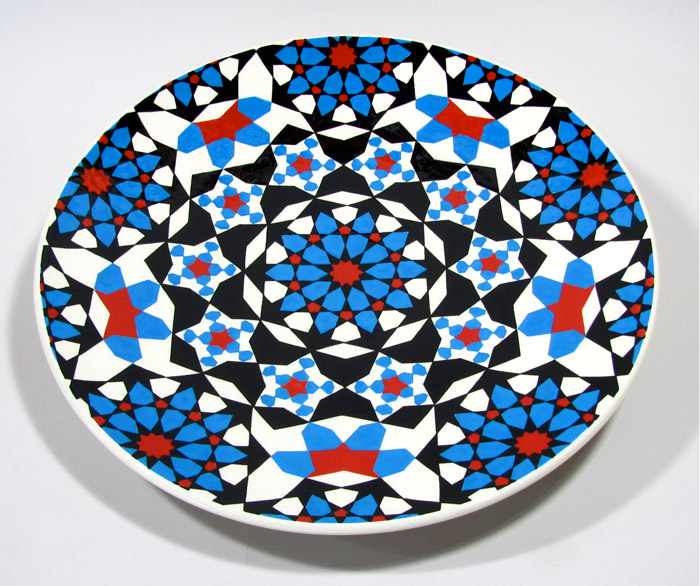
Platter by Paul Barchilon, the other chef in this family, whose main medium is ceramic!
One large container of whole milk or low fat organic yogurt (don’t use fat free!)
one peeled cucumber
one tomato chopped into tiny little cubes
lots of salt (kosher works best for this)
brown, yellow or red mustard seeds
a dried red cayenne or other hot chili pepper
olive oil
a handful of fresh cilantro chopped finely
On a clean cutting board, grate ½ to a whole peeled cucumber (I prefer to use the thin English kind). Pour a large amount of salt over the pile of grated cucumber and mix with your fingers so the salt is coating the cucumber. The purpose of this is to bleed out the water. Let this mess sit and water will be pouring out of it. I usually place a clean dishcloth under my cutting board near the pile and wipe the water as the salt drains the cucumber of its liquid. Let the cucumber salt thing happen for at least 10 minutes if not longer. Meanwhile mix yogurt until it is smooth in the bowl you will be serving the raita in. In a tiny little pan heat a few teaspoons of olive oil, add 1/8–teaspoon. mustard seeds and the dried red chili. The mustard seeds are done when they have changed color and popped. Do NOT over cook these, one minute usually does it. Add this hot oil with the seeds into your yogurt. With clean hands, grab a bunch of the cucumber stuff and wring out as much liquid as you can over the sink, dump the cucumber into the yogurt bowl, repeat this process until you’ve gotten all the cucumber in the bowl. Add chopped tomato and cilantro.
My husband does not like the seeds and occasionally I feel generous enough to leave some out for him that doesn’t have the seeds in it. I vastly prefer it with the seeds as the combination of the cold cucumber and yoghurt with the tiny pop and flavor of the mustard seed, just makes my mouth really happy. I hope you enjoy and make adaptations as your family or friends or self require, but I strongly urge you to remember the Ten Commandments of Nicole’s Kitchen, especially #1. Some folks also don’t like the tomatoes. Play with your food. You’ll find the right way to delight in this particular recipe.
I serve this Raita with all Persian dishes I make, with all Indian food I am cooking or if I have lots of cucumbers around in the summer and just want another way to serve that up. It is refreshing, cooling and really delicious.
This recipe amount is for one large pot, I always make big amounts of soup. I do this for many reasons, bur primarily so folks who are sick can get some and there are left-overs. You can always freeze a soup after it has cooled down on day two. I usually put soups in plastic yogurt containers, larger ones and label with the date and ingredients, for the freezer (never put glass in the freezer). I never put warm soup in plastic. I generally use quart and 1/2 gallon glass mason jars for storing soups or left overs in the refrigerator. When someone in need is sick, I have a ready bunch of soups available and can dispatch the right soup pretty quickly to whomever. And, if I’m sick or someone in my house is and no one has energy to cook, voila, good food easily available is on hand. Please see the Aisha Recipe for instructions related to curry and making your own combination.
Soaking lentils overnight is always a good idea. It isn’t necessary though, it just tenderizes and softens things and releases some of the gasses that legumes and beans tend to have. Lentils are very forgiving and easy. One of the tricks to my cooking is to have everything chopped up in bowls or handy nearby so you can just assemble it all together at the exact moment you need it. I highly recommend doing this, especially if you don’t have a sous-chef on hand, and most of us aren’t that lucky!
3–4 cups of red lentils, well rinsed and washed (rinsed at least five or six times and drained)
Olive oil
1-2 onions chopped/diced up (yellow is best)
¼– ½ root of fresh ginger root (grated very finely, including the juices that emerge when you are grating it)
½ – 1 teaspoon turmeric
1–2 teaspoons garam masala (this is also a combination of herbs)
½ – 1 teaspoon curry (optional, I don’t always add curry, this depends on the flavors and how things taste, sometimes I want a stronger set of flavors, sometimes not)
2-4 tomatoes, chopped up into small chunks (keep the juice with them in the bowl because that will go into the dhal as well)
a whole bunch of fresh cilantro, chopped up
Drizzle the olive oil onto a good pan with a lid, enough to sauté the onions with. Sauté the onions for ten minutes. Add grated ginger and sauté for another minute or two.Add turmeric and then add drained lentils and stir around in the pan so the oils, ginger and onions get distributed through. Add vegetable stock or water to cover the lentils. Bring to a boil, stirring occasionally. Lower heat to simmer and cover. Stir every 10–15 minutes and add water if more is needed. After about 30 minutes the lentils should be very mushy. Add the garam masala and a little curry, the chopped tomatoes and cook another 10 minutes. Add the cilantro at the last-minute. Serve over rice with tofu stir–fry, roasted almonds and raita (recipe to follow shortly). I like to have sheep milk feta on hand as well.





 Open Heart Open Hands