Category Archives: Recipes

Cool Cucumber Dill Soup (Bulgarian in Origin)

Nicole and her Mama!

In honor of my 50th birthday, which was yesterday, I dedicate this posting to my mother, Helen Redman, who taught it to me and who doesn’t think of herself as a cook, but she did make this when I was growing up. She got the recipe from her dear friend Radka Donnell, may her memory be for a Blessing. Radka was Bulgarian and an extraordinary quilt and fiber artist. This portrait of her done by my mother is from when they were both young women.

Portrait of Radka Donnell by Helen Redman

This is the perfect soup for summer and it takes fifteen minutes to prepare but has to sit overnight or all day, so you can’t make it and then just eat it. I recommend preparing it early morning, if you want it for dinner or the night before. It is better two days out and not good after four days. It’s got a perfect window and within that window, there is absolutely NOTHING like it to cool you down and refresh your palette, and there is a super plus benefit of this being one of the easiest recipes in my repertoire, so even you can make this soup!

  1. two to three cucumbers, you can use a combination of Armenian, Mediterranean, English or just two or three thin green ones. DO NOT USE A FAT bitter cucumber for this recipe and don’t use lemon ones, either.
  2. a cup or so of walnuts, roasted right before you chop them up
  3. a large container of organic whole milk or low-fat plain yogurt, Greek or Bulgarian is best, but any good whole milk yogurt will do. (don’t ever use non-fat for this recipe, if you do, I’ll come haunt you in your sleep)
  4. fresh dill
  5. olive oil
  6. good salt and freshly ground black or white pepper

Dump the yogurt into a large glass, porcelain or stainless steel bowl (don’t use plastic for any of my recipes, EVER! Fill the container you just emptied with exactly as much water as there was yogurt previously, put the lid on the container and shake it up, dump half of it into the bowl, then shake again, get all the yogurt out of the container. Whisk this together by hand until it is all one consistency, you do not need to use an electric mixer, this takes less than a minute by hand. Pour in at least a tablespoon of really good olive oil, I sometimes do more. Add a pinch or two of good salt and some freshly ground pepper and whisk all of that together really well. Then add the peeled and chopped cucumbers.

Directions for proper way to cut the cucumbers: peel the cucumbers, don’t argue with me about this, this soup needs peeled cucumbers. Cut them into long quarters, so in halves lengthwise and then in half again and then slice them really thin. Taste the cucumber before you put it in the soup, if it is bitter, then don’t use that cucumber.

Next, chop up into small pieces, your 1/2-cup to one cup of walnuts, you decide how much walnuts you want, I LOVE the walnuts and so I use a full cup. I roast them whole in my cast iron pan and have them on hand all the time for snacking. Please don’t use old rancid walnuts. When you are cooking something fresh, use fresh ingredients for all the parts, so prepare ahead of time by buying fresh walnuts, or if you buy nuts and aren’t eating them regularly, keep them in your freezer, not in a cabinet in your kitchen.

Then add the freshly chopped up dill. If you cannot get fresh dill, buy some dried dill from the bulk bin at your local health food store, don’t use your old crusty dill that has been sitting in your spice cabinet for three years. I will rant for a minute about this. Most DRIED spices are only good for a limited time, I buy smaller amounts of them from my bulk bins and use them up and then get new ones. Also, if I travel or have friends traveling I ask them to pick me up spices from Morocco, Turkey, Spain or Israel, because they are frankly an order of magnitude stronger and better. Americans are generally way too moderate of palette where flavor, spices and all things food is concerned.

Add the nuts last, mix it all up with a large spoon then transfer this to pint size mason jars or whatever large GLASS containers you have with lids, DO NOT USE PLASTIC. You need to be able to shake or stir the soup once or twice before serving it, so don’t fill the containers up all the way.

Refrigerate for at least six to eight hours and stir, shake it up once or twice during that time. You will want to add salt individually to this soup when you serve it and not over salt it during the making of it. I always have a variety of salts on my table available for folks to dip into and add to their individual bowls.

Enjoy!

Quickish Summer Eggplant

Japanese Eggplant
Japanese Eggplant: Photo from Photobucket:

(This recipe is adapted from Joy of Cooking)

  1. 3–7 Japanese eggplants, the long thin kind
  2. salt
  3. olive oil
  4. 3–5 fresh tomatoes
  5. garlic 1:1.5 ratio, one eggplant to 1.5 cloves of garlic pressed
  6. lots of fresh ground pepper
  7. feta cheese (I prefer French sheep milk feta, it is less salty and softer) If you won’t be using this kind, your dish will be saltier, so use less salt in your preparation.

Heat ¼ cup or more of olive oil in a non–stick or well–seasoned cast iron pan on medium heat. Slice the eggplants lengthwise in long thin oblong strips about 3–4 per eggplant. Slash them with a knife on the pulp side two or three slashes per strip and give them a quick slight dash of salt. Place them in the hot oil and fry them until they are reddish brown on both sides. Layer them into a glass baking or other nice baking dish, one layer only, so use a larger dish if you need to. Grind fresh pepper over each wedge. When all the eggplant has been fried, empty the oil out of the pan and grate the tomatoes, with a cheese grater over the pan, this is the quick way to peel tomatoes, because the skin stays in your hand and the pulp goes in the pan. Heat the tomato pulp on medium for awhile. You are trying to burn off the liquid, stir frequently. You shouldn’t need to add olive oil, because the pan was previously coated in it. Add the pressed garlic and a dash of salt. Let this cook down until it’s mostly a thick pulpy sauce, not too watery, 20 minutes perhaps. Spoon the tomato sauce over the eggplant and sprinkle the dish with the feta. Cover with an oven–safe lid or aluminum foil and cook in the oven at 375º for about 20 minutes. Serve with a nice fresh salad and some corn on the cob and good bread to soak up the juices.

Eggplant Realities and Recipes

All the eggplant dishes I cook require the following knowledge; picking the proper eggplant is what makes the difference between a dish that is bitter and one that is sweet and lovely tasting. Whether the eggplants are Japanese style or your traditional fat purple variety; the key is how heavy they are. The only proper way to pick an eggplant is to get involved in the veggie bin or with your farmer. If you are at your local market you may need to rearrange or make a mess for the grocery clerk to deal with. I actually recommend budgeting the time to arrange the eggplants back when you are done so as to ensure future harmony between yourself and the person who stocks your groceries. The deal is, you have to pick up every eggplant and compare it with every other eggplant. The heavier ones go in the reject pile, the lighter ones go in the keep pile. If there are ten eggplants and you only want three, after you’ve selected the five lighter ones, repeat the process with your remaining five until you’ve got the three lightest eggplants. If they are all heavy, make a different dish because it just isn’t worth the time and effort. All the eggplant recipes I know take hours to make, (with the exception of this recipe and Baba Ghanoush) so if you don’t have a good eggplant to start with, why bother?

Enjoy!

Nicole

Iranian Eggplant, Sooooooooo Goooooooooood!

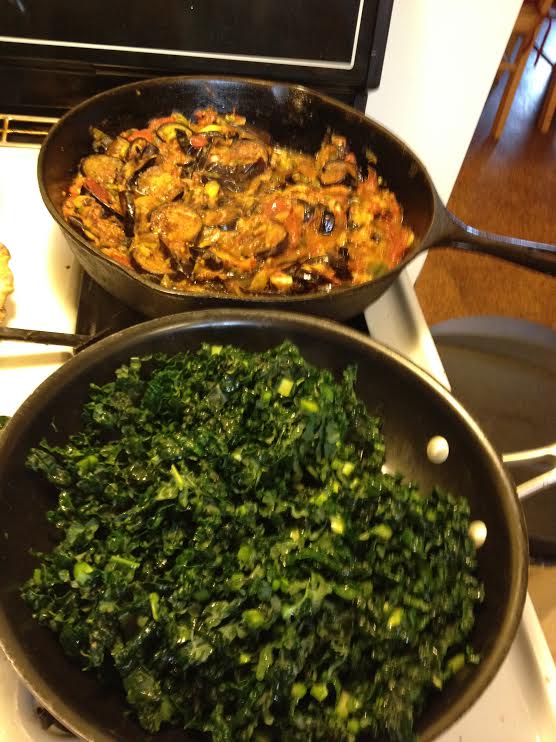
Iranian Eggplant in my favorite cast iron skillet

Eggplant Realities and Recipes

All the eggplant dishes I cook require the following knowledge; picking the proper eggplant is what makes the difference between a dish that is bitter and one that is sweet and lovely tasting. Whether the eggplants are Japanese style or your traditional fat purple variety; the key is how heavy they are. The only proper way to pick an eggplant is to get involved in the veggie bin or with your farmer. If you are at your local market you may need to rearrange or make a mess for the grocery clerk to deal with. I actually recommend budgeting the time to arrange the eggplants back when you are done so as to ensure future harmony between yourself and the person who stocks your groceries. The deal is, you have to pick up every eggplant and compare it with every other eggplant. The heavier ones go in the reject pile, the lighter ones go in the keep pile. If there are ten eggplants and you only want three, after you’ve selected the five lighter ones, repeat the process with your remaining five until you’ve got the three lightest eggplants. If they are all heavy, make a different dish because it just isn’t worth the time and effort. All the eggplant recipes I know take hours to make, (with the exception of Baba Ghanoush) so if you don’t have a good eggplant to start with, why bother?

The following recipe is an adaptation of one from Madhur Jaffrey’s World- of-the-East Vegetarian Cooking. This cookbook is in my Top Five Cookbooks List. Check out Ms. Jaffrey’s blog and link to her books above.

  1. three to five eggplants (depends on size of eggplant, this dish always amazing, so making more means left-overs and this dish is amazing a day later as well)
  2. olive oil, grape-seed or canola oil (at least 1/3 inch or more so you cover the pan for frying the eggplant in)
  3. two to three large tomatoes or 5 small ones (chopped small)
  4. one bunch of green onions (chopped finely)
  5. one bunch of fresh Italian (flat leaf) parsley, chopped finely
  6. fresh ground pepper
  7. lots of good salt (kosher or other high quality, see Let’s Talk Salt for details)

Slice the eggplants into rounds, not super thin, ½ inch thick. Cut into wedges or halves if you are using a big eggplant or just keep them in the rounds if you are using the thinner japanese style eggplants. Sprinkle with a goodly amount of salt and put them in a colander. Place the colander in a large bowl so the liquid that sweats off the eggplants can drain. They will have to sweat for at least 30 minutes.

I recommend having 2 non–stick or well–seasoned cast–iron pans going to speed up the cooking process. Heat a lot of oil, olive oil is my preference, or some combination of olive oil and another oil, about 1/3 inch of oil per pan until the oil is hot, but not smoking ever! Medium heat will work fine. Lay out several clean dish towels and put the salted eggplant rounds or wedges on the towels. With another dry dish towel pat the eggplants dry. I endeavor not to use paper products in my kitchen, but if you have to use paper towels, I’ll never know.

Place the dried wedges in the oil. They will be in the oil for a while, until they turn reddish-brown, then turn them over somewhere between three and five minutes per side. Have another colander next to your stove, also sitting in a bowl. When the wedges are reddish-brown on both sides, take them out with a fork, letting as much oil as you can drip back into the pan, and put them in the clean colander. This process is the time-consuming part of this adventure in cuisine . It will take about 40 minutes to an hour or more standing over several pans of hot oil with lots of wedges of eggplant in them for a dish that everyone will love and which will be consumed in ten minutes.

You have to love your guests to make this dish for them. While the eggplants are cooking and you are checking on them, you can prepare the tomatoes and the onions. Chop finely the parsley, and green onions. You can do the tomatoes in smallish chunks, not tiny, and place all of this in a bowl together.

When all the eggplant wedges have been cooked, drain the largest of your pans (that has a lid) of the hot oil. Do not wash out this pan just drain it. Put it back on the stove and turn it on low, put the cooked eggplant wedges and all the other ingredients in the pan and stir them up so they are combined well. Grind a ton of black pepper over all of this, mix and cover. Cook on low heat for about 15–20 minutes, stirring two or three times. You won’t need extra oil or salt.

Serve this with Paul’s Perfect Raita and some fresh greens. You can make a grain like couscous or rice and some kind of tofu or fish dish or just eat this plain with a good ethnic bread. Make sure you scrape the pan of the yummy juices when you are done. This dish is also great a few days later, so if you want to make it ahead of time and then refrigerate it, that’s fine. It takes two to three hours from start to finish to make. Important tips, using more than one pan to fry wedges in, lightly wiping the salt or salt sweat off each wedge, breathing a lot and not attempting this dish with children nearby. If it didn’t take so long to do, I’d make it every week in the summer months when eggplants and tomatoes are at their peak.

Iranian Eggplant and Fresh Kale

Enjoy!

Perfectly Poised and Precious Pickled Beets

Beets from Redwood Roots Farm, the same ones that end up in this recipe!

Even those who eschew beets will like these. I have turned the palettes of many a beet hater with these. Those who love beets, love this recipe and it is in honor of Dr. Megan Jamilah Furniss that I am posting this recipe today.

Perfectly Poised and Precious Pickled Beets

  1. one or two bunches of beets (golden, red, or any combination thereof)
  2. one small onion sliced in half and then into thin strips
  3. dash of Mirin
  4. ½–1 whole cup of apple cider vinegar
  5. dash of white wine vinegar
  6. juice of ½ lemon or more
  7. pinch or two of good salt, (I used to use tamari or coconut aminos but now prefer salt, see my Let’s Talk Salt post)
  8. drizzle of olive oil
  9. ¼–½ teaspoon. of white pepper
  10. ¼–½ Tbsp. garlic powder
  11. ½ teaspoon. of dry dill or a bunch of chopped fresh dill, or parsley or tarragon (you need a greenish garnish)
  12. beet green leaves, sliced very, very fine and thin (optional)

Cut the greens off the beets and put aside for salads or soups or keep a few choice leaves two at most to cut thin and add in at the end. Cut off the part of the beet where the stems grew and the pointy tips. Do not peel them. Put whole beets into a large pot with water covering them. Let boil for 20–40 minutes. Once the water begins to boil, you can turn the heat down, but make sure you keep it simmering/boiling a little. It’s okay if you forget about them for a little while. You may have to add water if too much of it evaporates while they are simmering. You want these puppies cooking hot. Don’t cover the pan, you won’t be able to see what’s happening. You will know they are done if you can easily slice or poke through one with a knife, or you can just go for the 40 minute time. Put the pot in the sink and run cold water over the whole beets for a while. The skins will slip off the beets as you rub your hands over them. If you are preparing these in a hurry, you will have to work with the beets hot, which isn’t so easy. Otherwise, while the cold water is running, the skins will just come off as you fondle the beets. It’s so cool. The beets should be cooked all the way through and cut like butter, otherwise they aren’t done enough. Place them in a clean bowl and slice them in rounds or in half and then into thin slivers, however you like, although I am not a fan of chunks. The more surface area you expose with your slicing or cutting the more flavor is released. This is a principle of BIOLOGY, not just my preference. Slice onion in half or keep it whole but make sure you slice very thin slivers and add to the sliced beets.

Pour a liberal amount of vinegar over these, at least ½ to 1 cup of the vinegar. Add the oil and sprinkle white pepper and garlic powder, dash of salt (tamari or coconut aminos) and Mirin and stir. Taste and adjust flavors as needed. If you have fresh herbs, chop these up and throw over the beets. You can use dried dill if you don’t have fresh herbs, but fresh herbs are better. Do not use basil on these. You can serve warm or cold. Taste the sauce and a beet. If it’s too sweet, add more vinegar. These should be stored in a glass mason jar and can keep for a week or two. They will be better the second day. The olive oil congeals in the fridge, so it’s best to take these out of the fridge and serve them at room temperature if you remember.

Perfectly Poised and Presented Pickled Beets in a small dish and on a platter both made by Paul Barchilon
Perfectly Poised and Presented Pickled Beets in a small dish and on a platter both ceramic pieces by Paul Barchilon

Brazilian Sweet Potato, Tomato and Carmelized Onion Soup

The Eye of Ha-Shem to Bring you a taste of Heaven, like this soup will!
The Eye of Ha-Shem to Bring you a Taste of Heaven, like this soup will!
Sopa do Batata Doce (Brazilian)

I got this recipe from an old Boulder High School buddy, who is a foodie like me. We are still good friends. I love it when folks bring me new recipes. He uses chicken or beef stock, but since my husband is vegetarian, I usually make all dishes vegetarian unless I know he won’t be eating them. If you make the Roasted Root Vegetable Stock recipe below, like I do, you will not miss any flavor. If you don’t have time to make this stock, make sure and use some kind of vegetable or other stock, even if it is something from the store (for shame!). It really gives this soup a better flavor.

2-3 white sweet potatoes (sometimes called Hannah or Japanese sweet Potatoes, you can also use the orange kind, but it is better with the white ones)
2-3 onions
4-6 medium flavorful tomatoes
4-8 Tablespoons unsalted sweet butter

4-8 or more cups of Roasted Root Vegetable Stock or stock of your choosing.

Roasted Root Vegetable Stock:

Wash well all the veggies. It is better to not peel any of them for this stock. Chop up a bunch of veggies, I use carrots, celery (including the tops with the leaves), onions, turnips, parsnips, mushrooms, etc.. big chunks are fine. Combine all of the veggies in a large bowl and toss with some olive oil, salt and pepper and some fresh herbs like parsley, (stalks and all) and don’t forget several cloves of garlic.

Throw all of this onto a baking sheet and bake at 350-400º for about an hour. During that hour use a large spoon or spatula and move the veggies around a few times. Start a large pot of water to boil on your stove and dump all of the veggies into it. At this point I add chard or beet greens or kale, just a few leaves chopped up. Let all of this water and veggies boil and simmer for at least an hour, if not more. Strain the veggies through a colander with cheese cloth or a very clean thin dish towel over a strainer into another large bowl or pot. You can use a pan or spoon to press out all the good veggie juice into your strained stock. You can let this cool and freeze for future use or start making the soup, right now!
Peel and chop sweet potatoes
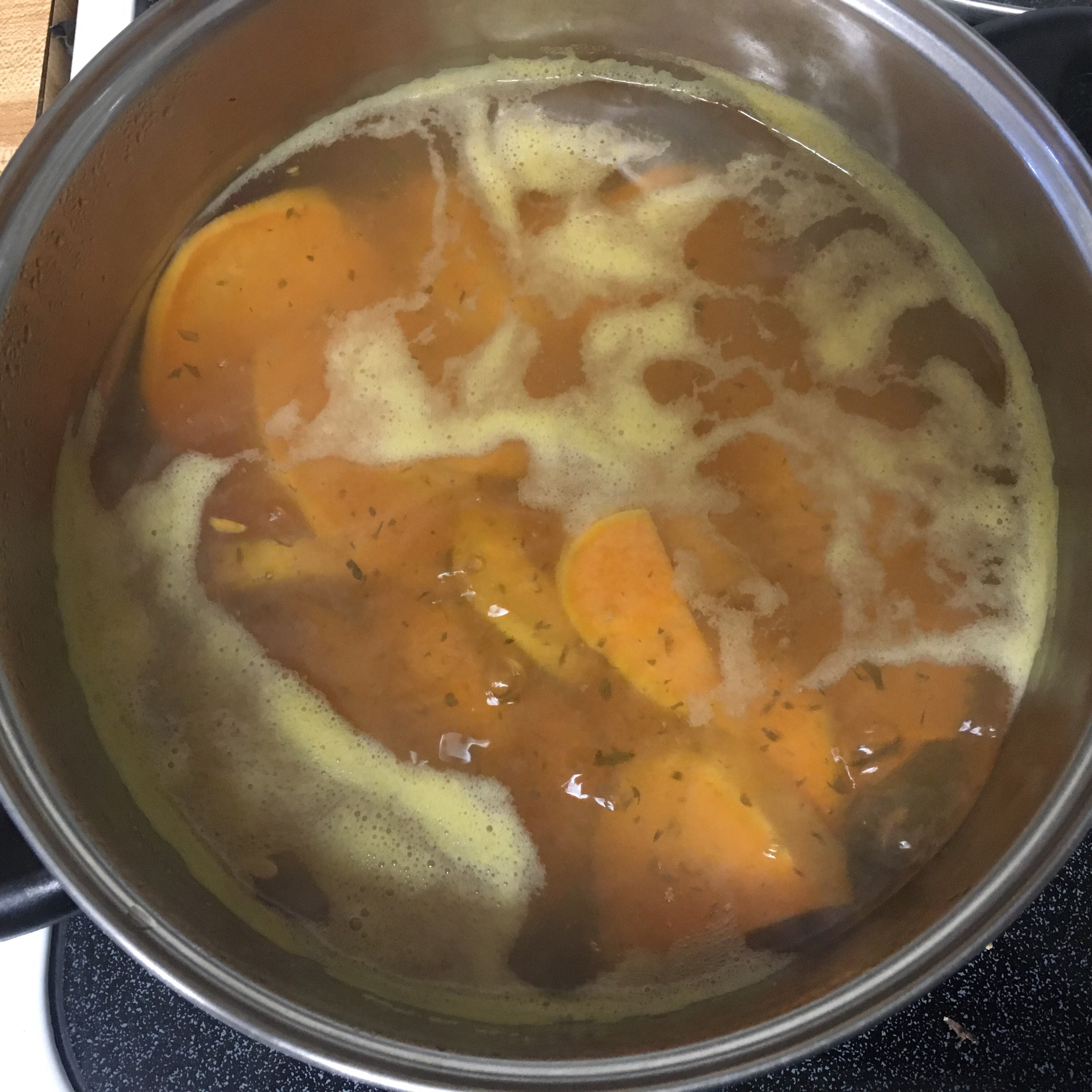
Simmer sweet potatoes in stock until cooked
Peel and chop onions and sauté onions in some of the butter until they are carmelized, which I think takes about an hour or more. You must cover the pan the onions are in and stir frequently and keep the flame on pretty low.
Chop tomatoes
Add tomatoes and onions to soup
Cook a few more minutes
Puree the soup
Add the rest of the butter
Add good salt and pepper to season
Garnish with parsley or use some of Esti’s Parsley Sauce to spice this up a bit.

Enjoy!

Nicole